Dr. Mohit Bhandari Creates History at RACS 2026 with Australia’s First Live Tele-Surgery
A defining milestone in global robotic surgery — connecting Perth to Indore through real-time surgical expertise.
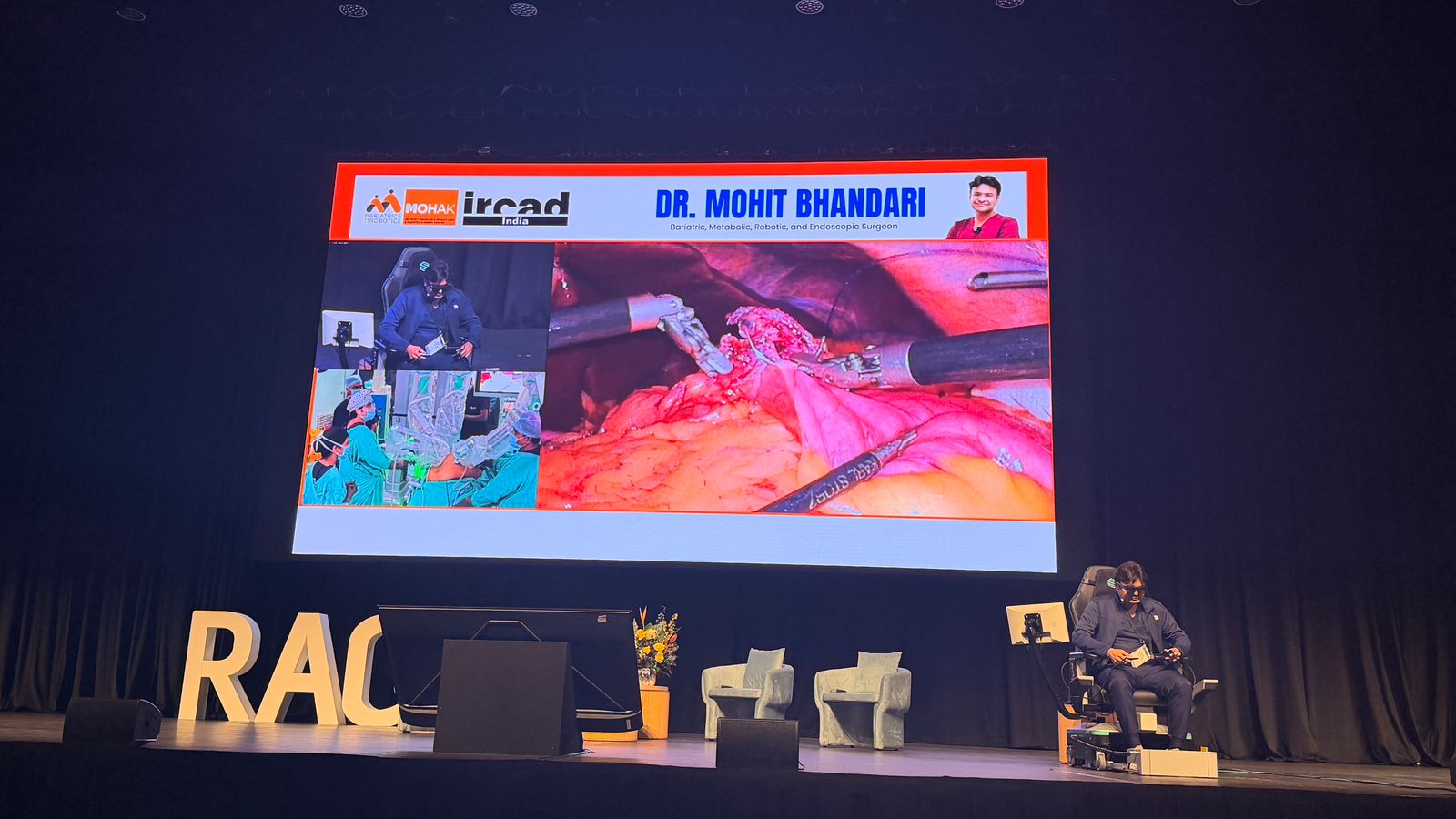
Officially Recognized:
Dr. Mohit Bhandari awarded "Distinguished Visitor" at the 94th RACS Annual Scientific Congress.
Australia’s First Live Tele-Surgery Demonstration
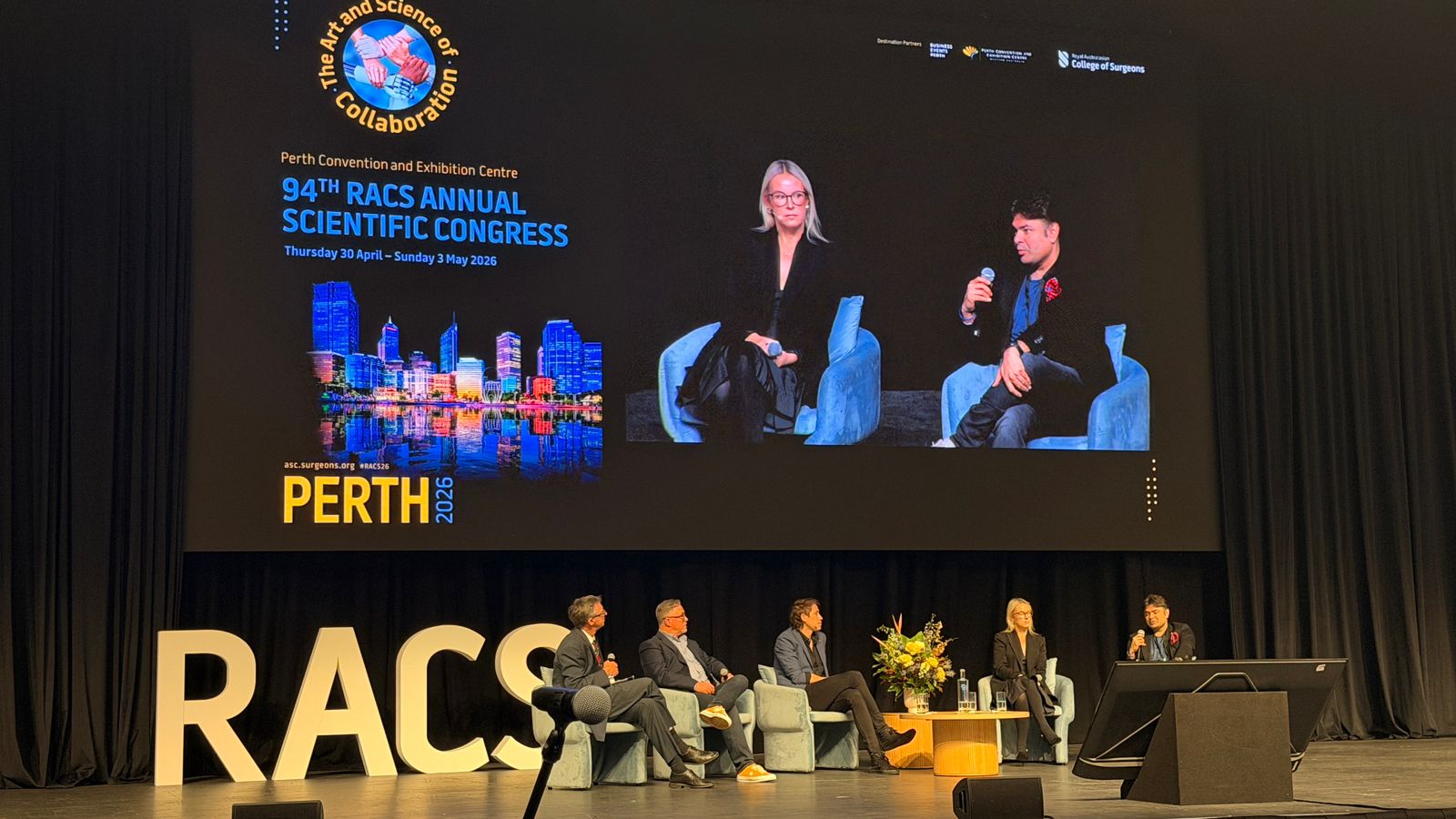
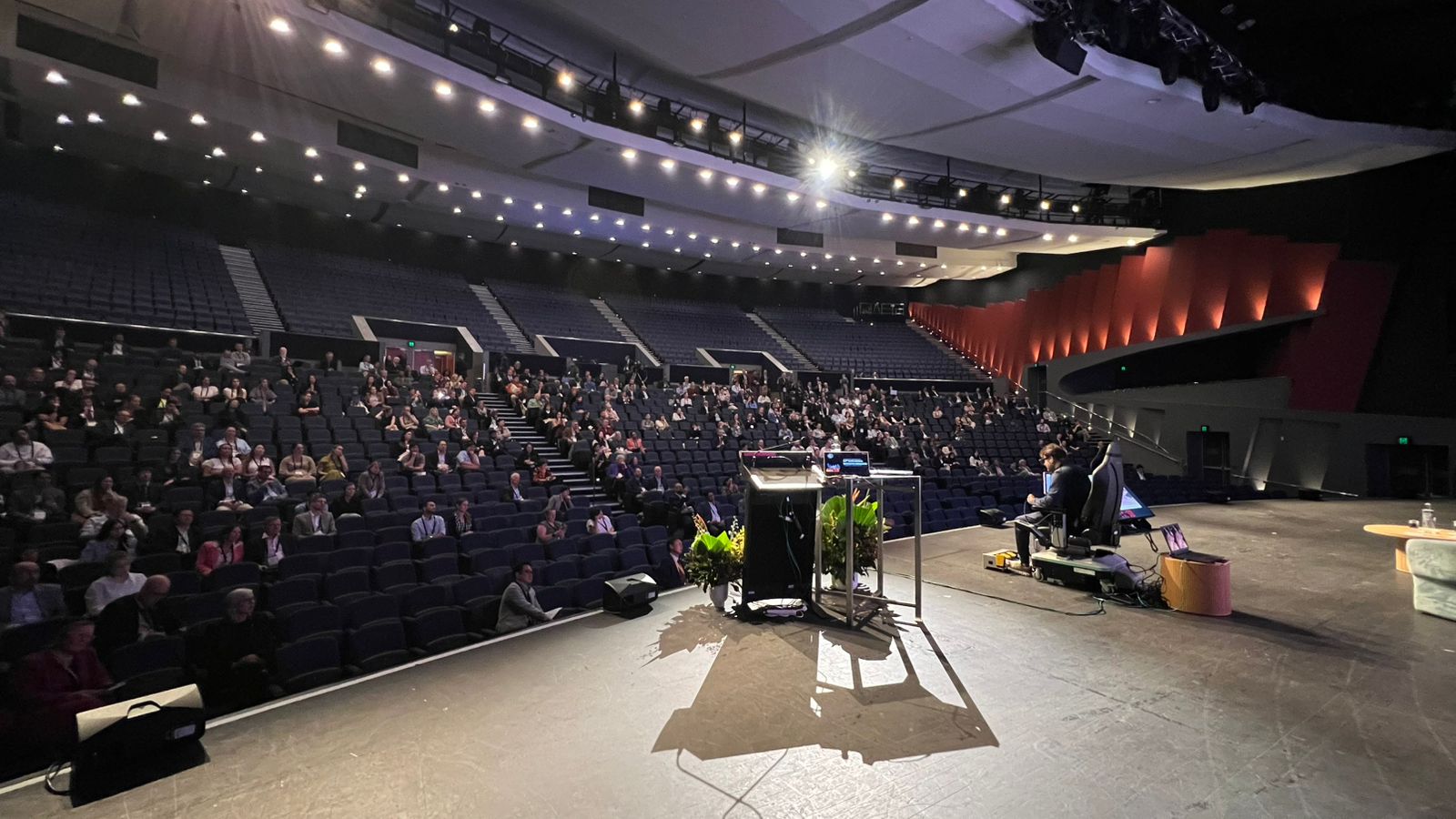
Operating from the Perth Convention and Exhibition Centre, Dr. Bhandari performed a remote procedure on a patient located in Indore, India. This wasn't just a technical test; it was a live demonstration of how the SSi Mantra robotic system can bridge thousands of miles with zero-latency precision.
The real milestone is not distance. The real milestone is confidence across distance.
A Plenary Topic on the Future of Robotics
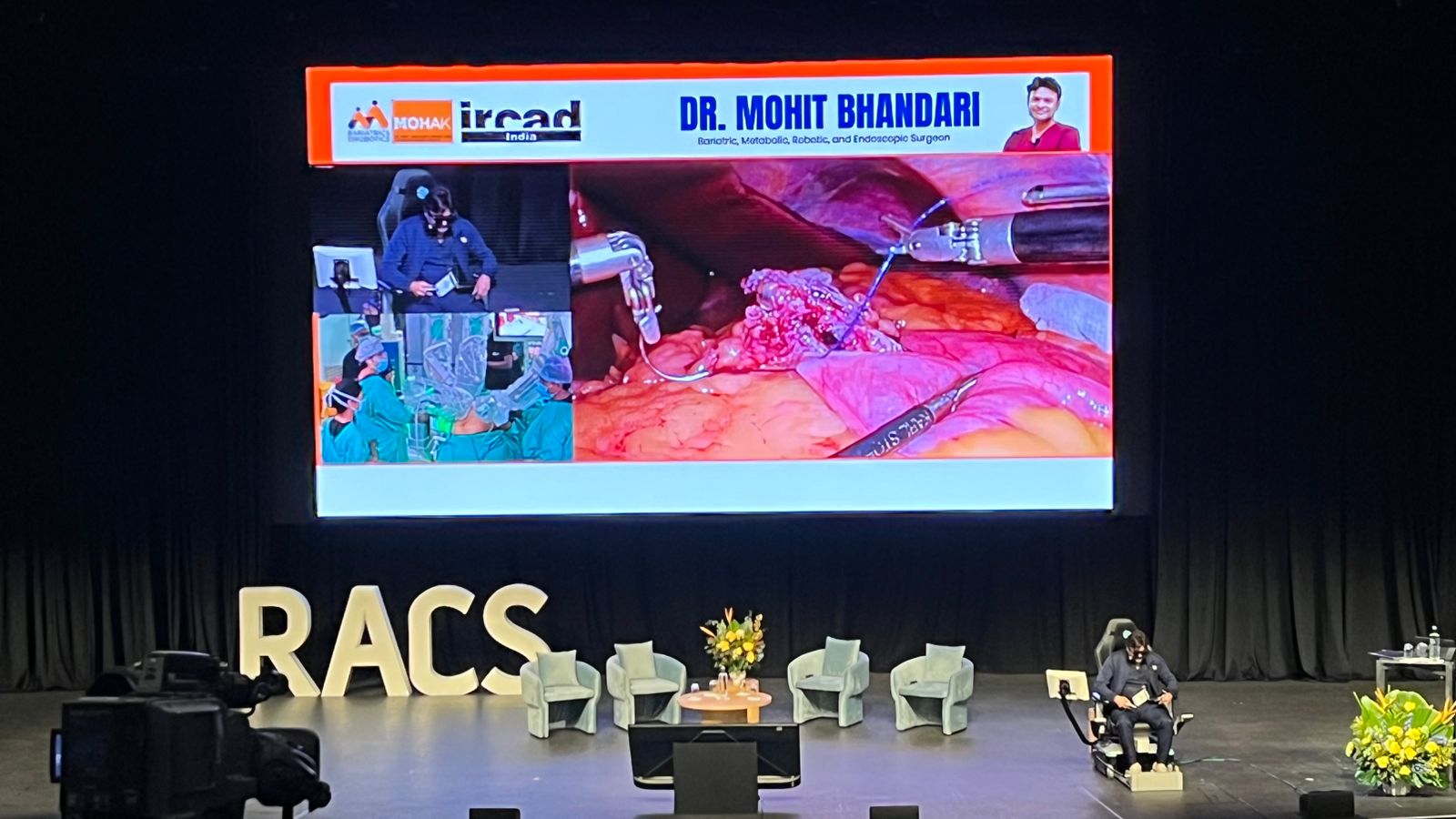
The plenary session, "Across Oceans – At the Console," addressed the surgical community's most pressing questions about the scalability of telerobotics. It demonstrated that expert surgical mentoring and intervention are no longer limited by a surgeon's physical location.
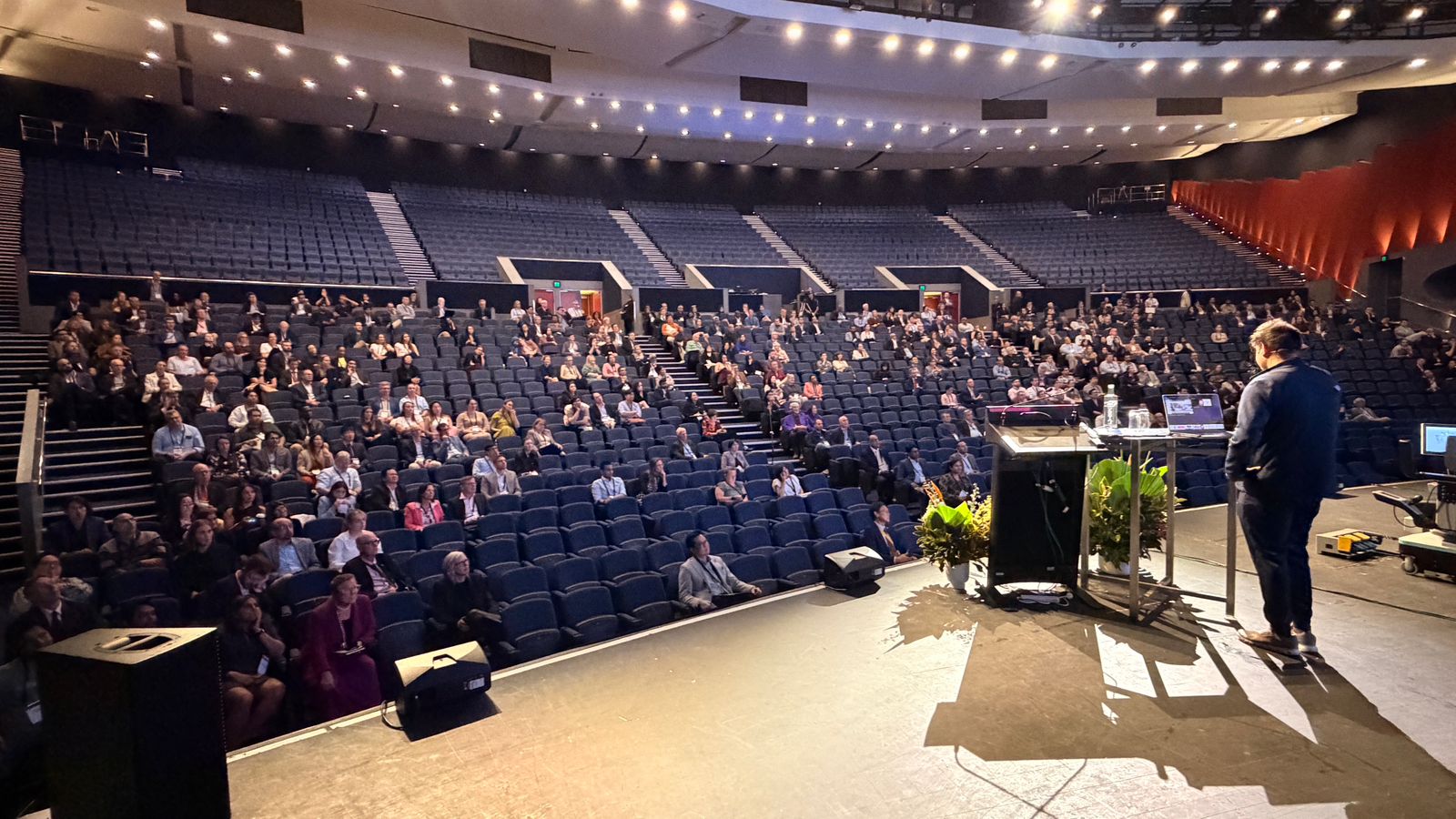
The Future of Surgery Is Connected
Dr. Mohit Bhandari’s achievement at RACS 2026 is more than a headline. It is a signal that geography may no longer define the limits of expertise.
There are moments in medicine that do more than celebrate an individual achievement. They shift the imagination of what may be possible for patient care, surgical training, and global collaboration.
At the 94th RACS Annual Scientific Congress 2026 in Perth, Australia, Dr. Mohit Bhandari marked one such moment.
The Royal Australasian College of Surgeons’ Annual Scientific Congress 2026 was built around the theme “The Art and Science of Collaboration” — a theme that could not have been more appropriate for a milestone where surgical experience, robotic technology, real-time connectivity, clinical teamwork and cross-border coordination came together on a single platform.
At this global surgical meeting, Dr. Mohit Bhandari became the first international surgeon to be granted a licence to operate in Australia for a scientific conference and performed Australia’s first live tele-surgery demonstration — operating remotely from the Perth Convention and Exhibition Centre, while the patient and clinical team were located at his centre in Indore, India.
This was not only a technological milestone. It was a defining moment for Indian robotic surgery on the global stage.
The real milestone is not distance. The real milestone is confidence across distance.
From Perth to Indore: When Distance Stopped Being the Barrier
For decades, surgery has been defined by physical presence. The surgeon, the patient, the operating room and the surgical team were all required to be in the same place.
Tele-surgery challenges that traditional boundary.
In this landmark demonstration, Dr. Mohit Bhandari operated from Perth while the patient remained in Indore. The procedure was enabled through the SSi Mantra surgical robotic platform, real-time connectivity, and a coordinated clinical team at the patient-side centre.
The deeper meaning of this achievement lies not merely in the distance covered, but in the trust required to make such a procedure possible.
A live tele-surgery demonstration demands more than a robotic platform. It requires a surgeon with deep operative experience, a trained patient-side team, robust clinical protocols, reliable connectivity, ethical and regulatory clearances, and a system designed for safety under pressure.
This is where experience becomes the true technology.
A Plenary Topic That Captured the Future of Surgery
Dr. Mohit Bhandari’s official plenary topic at RACS 2026 was:
“Across Oceans – At the Console – The Reality of Telerobotic Surgery”
The session explores how robotics and digital connectivity are reshaping the way surgeons operate, collaborate and teach. It captures the real importance of this moment: tele-surgery is not only about performing an operation from another country. It is about reimagining how expert surgical care, mentoring, training and clinical collaboration may evolve in the future.
For advanced surgical specialties, this has enormous implications. A surgeon in one geography may one day be able to support teams in another geography. Centres with deep expertise may be able to mentor, guide, and collaborate beyond physical borders. Complex surgical knowledge may travel faster than patients need to.
That is the promise of connected surgery.
Technology Meets Surgical Judgment: The Role of SSi Mantra
The live tele-surgery was powered by the SSi Mantra surgical robotic platform, a Made-in-India robotic surgery system associated with important developments in remote robotic surgery.
But technology alone does not create history.
In surgery, the robot does not replace judgment. It extends the surgeon’s hands. It enhances precision, but it still depends on planning, anatomy, decision-making, complication readiness, and team coordination.
This is why the human experience behind the console remains central.
Technology Extends Capability
Robotic systems may support precision, ergonomics, visibility and controlled movements in selected surgical settings.
Experience Guides Decisions
Every movement still depends on surgical judgment, patient selection, team preparedness and safety protocols.
Why This Matters to Patients
For patients, a global achievement like this can sometimes feel distant or overly technical. But its meaning is actually very personal.
When a surgeon is trusted to operate live from an international scientific platform, it reflects something patients deeply care about:
- experience that is recognised beyond one city or country
- surgical systems that are prepared for advanced technology
- clinical teams trained to work with precision and coordination
- a centre connected with global surgical progress
- decision-making shaped by real-world experience, not only theory
For a patient considering obesity treatment, metabolic surgery, robotic surgery or advanced gastrointestinal care, trust is not built only by machines, buildings or advertisements. Trust is built by the depth of clinical experience behind every decision.
The same principle applies across obesity care. Not every patient needs bariatric surgery. Not every patient is suitable for a balloon. Not every patient should depend only on medication. The real science lies in selecting the right treatment for the right patient.
That is why large real-world experience matters. Thousands of obesity treatment journeys — including bariatric surgery, gastric balloons, endoscopic therapies and medically supervised weight-loss programs — create patterns that help doctors choose better and patients decide with greater confidence.
Technology extends the surgeon’s hands. Experience guides every decision.
India’s Surgical Innovation on a Global Stage
This milestone is also significant for India.
For many years, advanced surgical technology was largely seen as something India adopted from the West. Moments like this change that narrative.
A surgeon from Indore operating remotely from Perth, using a Made-in-India robotic platform, demonstrates a new reality: India is not only participating in surgical innovation. India is contributing to it.
This does not diminish the importance of global collaboration. In fact, it strengthens it.
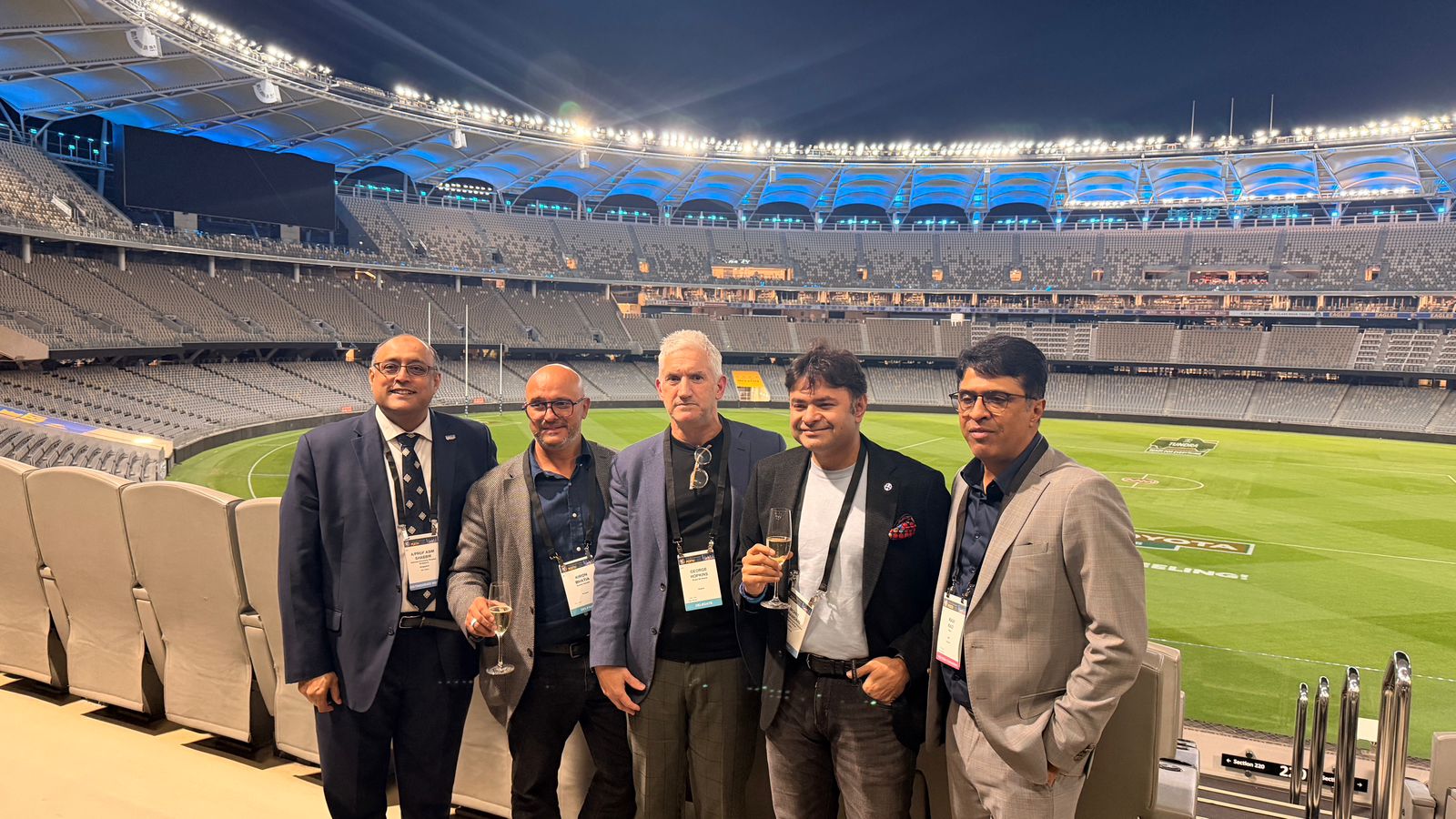
RACS ASC 2026 itself was designed around collaboration — between surgeons, scientists, researchers, engineers, policy makers, industry and patients. Dr. Bhandari’s tele-surgery demonstration reflected that theme in action: an Indian surgeon, an Australian scientific platform, a robotic system, digital connectivity, and a patient-side clinical team working together across borders.
This is what the future of surgical progress may look like — not isolated excellence, but connected excellence.
Beyond the Operation: A New Model for Learning and Collaboration
The implications of tele-surgery extend beyond one procedure.
A live tele-surgery demonstration can influence how surgeons learn, how young doctors observe complex procedures, how expert guidance may reach distant centres, and how surgical ecosystems prepare for the future.
The ability to connect expertise across geography may become particularly meaningful for regions where access to highly specialised surgical care is limited. It may help shorten the distance between expertise and need. It may support training. It may improve confidence in complex decision-making. It may allow centres to learn from each other faster.
However, this future must be built responsibly.
Tele-surgery requires strong safeguards: patient consent, ethical oversight, regulatory clarity, cybersecurity, latency control, backup planning, patient-side readiness, and clinical accountability. It should not be treated as a spectacle. It must remain a disciplined medical process.
That is what makes this milestone important. It shows not only what technology can do, but also why systems, protocols and experienced teams matter.
From Indore to Perth: A Global Surgical Innings
Perth is known globally as a city of high-pressure sporting moments — a place where pace, precision and timing matter. In that sense, the analogy is fitting.
This was not a routine appearance on a global stage. It was a high-pressure surgical innings.
The pitch was global. The technology was advanced. The patient was in India. The operating console was in Australia. The responsibility remained clinical, human and deeply personal.
Dr. Mohit Bhandari’s live tele-surgery at RACS 2026 represents a proud moment for Mohak Bariatrics & Robotics, for Indore, and for Indian surgical innovation.
But more importantly, it points toward a future where surgical knowledge can travel, expertise can connect, and patient care can become more collaborative than ever before.
The Future of Surgery Is Connected
Dr. Mohit Bhandari’s achievement at RACS 2026 is more than a headline. It is a signal that robotic surgery is entering a new phase, that geography may no longer define the limits of expertise, and that Indian surgical leadership has a meaningful role in global innovation.
The future of surgery will not be built by machines alone. It will be built by experienced surgeons, prepared teams, responsible technology, ethical systems, and a shared commitment to better patient care.
When innovation meets purpose, surgery can cross borders.
References
Official RACS ASC 2026 event information: RACS Annual Scientific Congress 2026
Official RACS plenary speaker listing: RACS ASC 2026 Plenary Speakers
SSi Mantra information: SS Innovations
Featured in The Australian Post: The Indian Sun https://share.google/g4ICcP2xjQOsFlNxP
Experience, technology, and patient-first surgical thinking.
Mohak Bariatrics & Robotics continues to work at the intersection of advanced obesity care, robotic surgery, clinical experience and global surgical collaboration.