
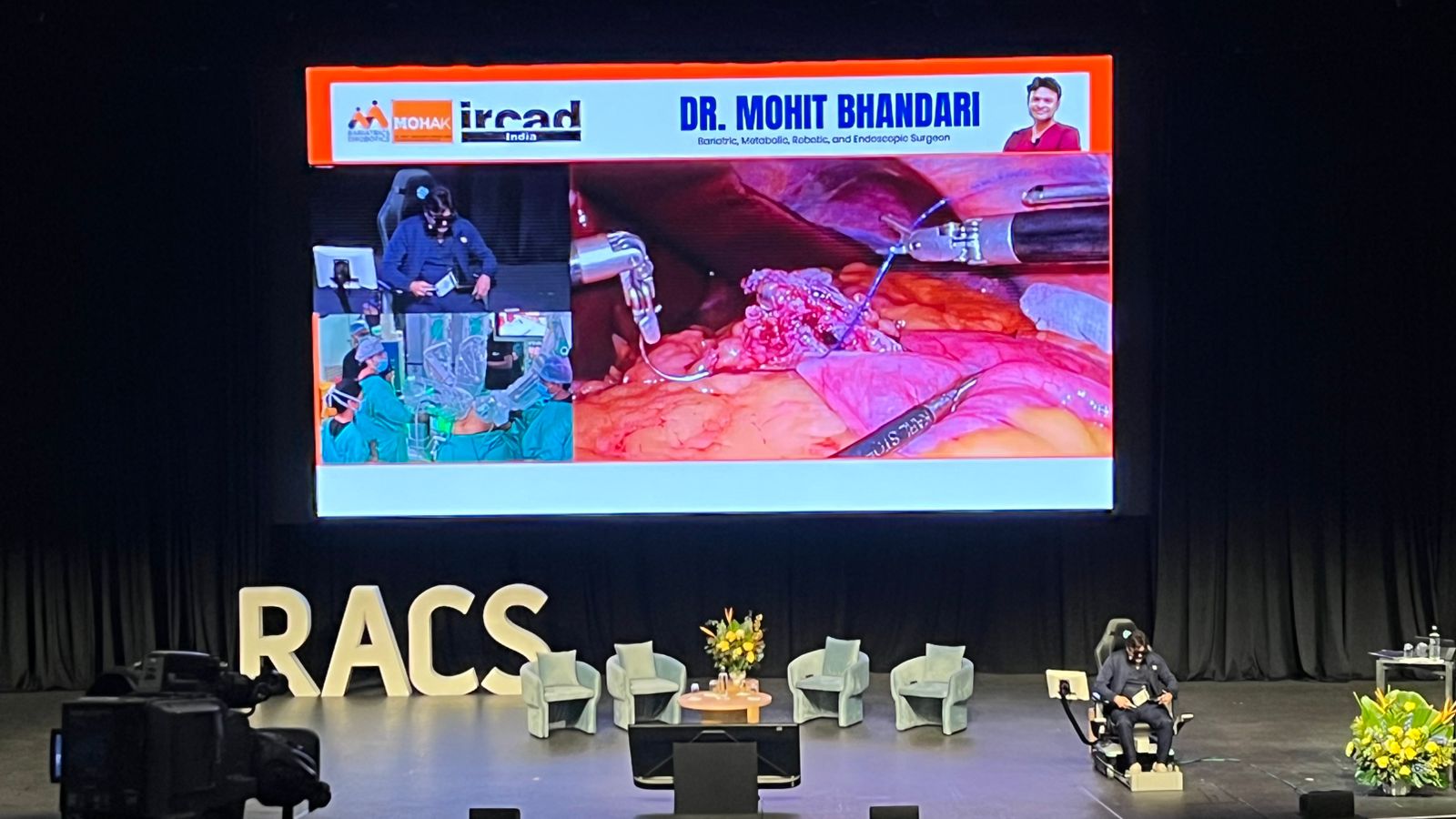
Dr Mohit Bhandari Performs Australia's First Live Tele Surgery at RACS 2026
The RACS Annual Scientific Congress 2026 stood as a landmark gathering of global surgical leaders, innovators, and researchers, all united by a shared vision of advancing healthcare through collaboration and technology. Hosted in Perth, the congress provided a powerful platform for exchanging ideas, showcasing innovation, and shaping the future of surgery.
At this prestigious event, Dr. Mohit Bhandari achieved a historic breakthrough by becoming the first international surgeon to receive a license to operate in Australia during a scientific conference. This recognition not only acknowledged his expertise in advanced surgery but also highlighted the increasing trust in technology-driven surgical practices. It marked a significant step toward a future where global collaboration and innovation are at the forefront of patient care.
A Historic First: Performing Australia’s Live Tele-Surgery
One of the most defining moments of the congress was Dr. Mohit Bhandari’s successful performance of Australia’s first-ever live tele-surgery. Operating remotely from the Perth Convention and Exhibition Centre, he conducted the procedure on a patient located in India at his center in Indore.
This remarkable achievement demonstrated that geographical distance is no longer a barrier in delivering high-quality surgical care. Through real-time connectivity and advanced robotic systems, surgical expertise can now be extended across continents. The procedure not only showcased technical excellence but also reflected a transformative shift in how healthcare can be delivered—making it more accessible, efficient, and patient-focused.
Tele-surgery, once considered a futuristic concept, is now becoming a practical and reliable solution. This milestone reinforces the idea that innovation in medicine can bridge gaps, ensuring that patients receive expert care regardless of their location.
Technology Meets Expertise: The Role of Advanced Robotics
The success of this tele-surgery was powered by the SSI Mantra robotic platform, a cutting-edge system designed for precision, control, and real-time responsiveness. The integration of this advanced technology with surgical expertise ensured that the procedure was performed with the highest standards of safety and accuracy.
Robotic platforms like SSI Mantra are redefining surgical practices by enhancing precision and minimizing human limitations. In the context of tele-surgery, they play a critical role in enabling seamless remote operations, allowing surgeons to perform complex procedures without being physically present.
This advancement underscores the growing importance of tele-robotic systems in modern medicine. As these technologies continue to evolve, they have the potential to significantly improve patient outcomes while expanding access to specialized surgical care. The combination of innovation and expertise is paving the way for a new era in healthcare delivery.
Collaboration at the Core of Innovation
The RACS Annual Scientific Congress 2026, held from April 30 to May 3, marked its 94th edition and centered on the theme “The Art and Science of Collaboration.” The event emphasized that meaningful progress in healthcare is driven by partnerships, between surgeons, scientists, engineers, and technology experts.
Dr. Bhandari’s tele-surgery stands as a powerful example of this collaborative vision in action. It highlights how coordinated efforts across disciplines and geographies can lead to breakthroughs that redefine what is possible in medicine. From the development of advanced robotic systems to their real-world application in surgery, every step reflects the importance of teamwork and shared knowledge.
Collaboration in modern healthcare is no longer limited by borders. It is a dynamic process that brings together diverse expertise to create innovative solutions. This approach not only accelerates progress but also ensures that advancements are both practical and impactful.
India’s Growing Role in Global Surgical Innovation
This milestone also holds special significance for India, showcasing its growing contribution to global healthcare innovation. By successfully performing a tele-surgery across continents, Dr. Bhandari has demonstrated that world-class expertise and advanced technology can originate from India and make a global impact.
The achievement reflects the country’s progress in adopting and advancing cutting-edge medical technologies. It also highlights the importance of continued investment in research, training, and infrastructure to further strengthen India’s position in the field of modern surgery.
Beyond national recognition, this accomplishment serves as an inspiration for the broader medical community. It reinforces the idea that innovation knows no boundaries and that excellence can emerge from anywhere in the world.
Final Thoughts: A New Era in Global Surgery
Dr. Mohit Bhandari’s achievement at RACS 2026 represents more than just a technological breakthrough, it marks the beginning of a new era in global surgery. An era where distance is no longer a limitation, where expertise can be shared seamlessly, and where collaboration drives meaningful progress.
Tele-surgery has the potential to transform healthcare delivery by making specialized care more accessible, especially for patients in remote or underserved regions. It reduces the need for travel, minimizes delays, and ensures timely interventions by highly skilled professionals. At the same time, it opens new opportunities for medical education, enabling surgeons worldwide to learn from real-time procedures and continuously enhance their skills.
As healthcare continues to evolve, such milestones serve as powerful reminders of what can be achieved through innovation and collaboration. They set the stage for a future where high-quality, patient-centered care is not limited by geography but driven by technology and expertise.
This landmark moment not only redefines the possibilities of modern surgery but also reinforces a simple yet powerful idea that, when innovation meets purpose, the impact can truly be global.